

The Dream Place
On the Bondi Beach shootings as an Australian living in the U.S.

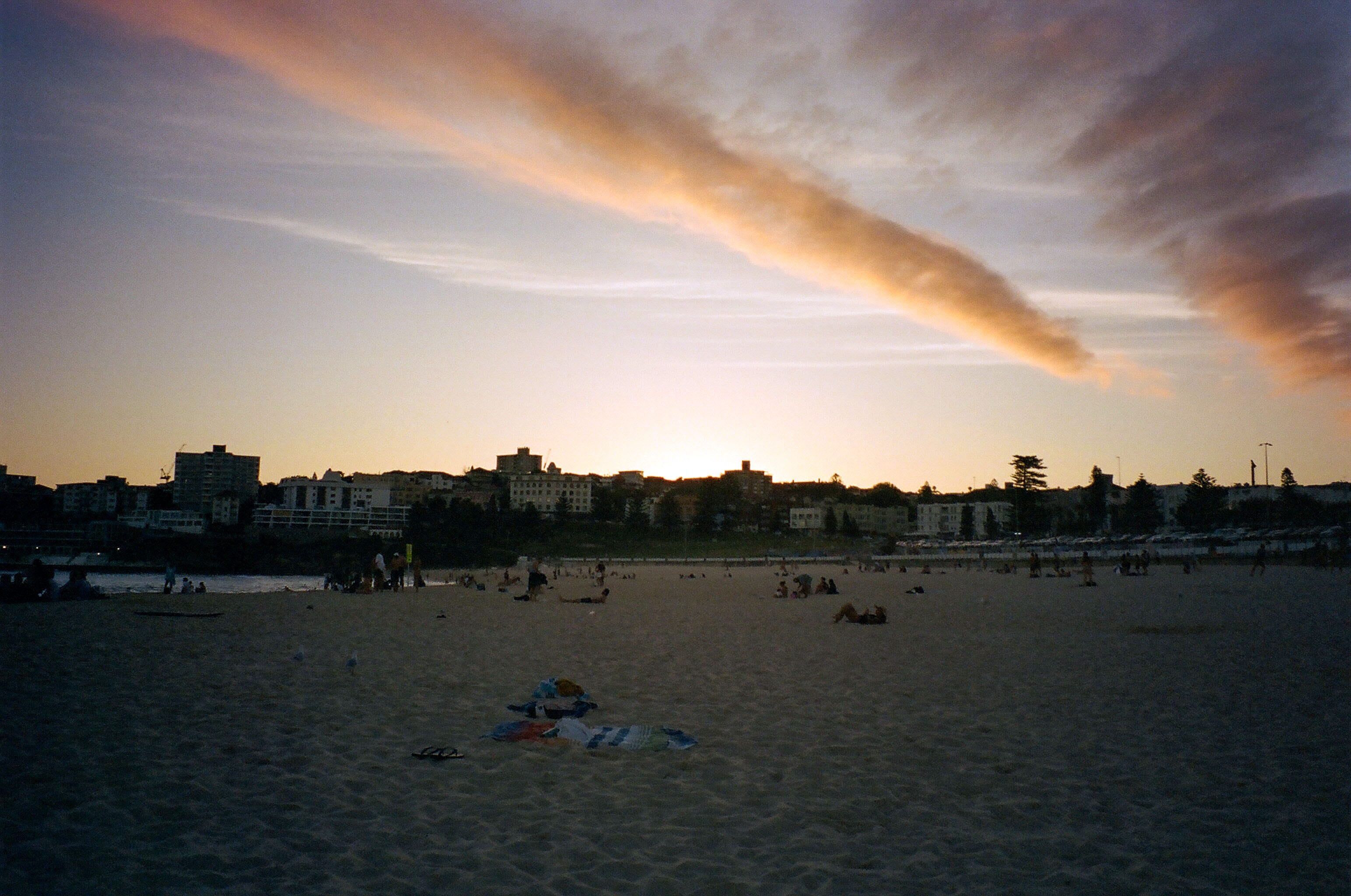
I am an Australian far from home in the throes of homesickness. I salivate for the smell of eucalyptus, the sound of the ocean, the sizzle of the sidewalk while walking home in the middle of summer. I yearn for socialized health care, marvel at the free education I benefited from, our gun control laws, the way that we acknowledge the indigenous caretakers of the land before us in every public address. Australia is not a perfect place, of course it has a deeply racist history. The cost of living is rising as it is here, climate change stalks its beautiful forests and plains with recurring fires and droughts, and there are endless secret human rights violations in its offshore asylum facilities. And still, my ten years living in America has, in contrast, made Australia a symbolic fantasy Eden. A protected place to return to if shit really starts hitting the fan. Australia has its problems, but it doesn’t have these very specifically American problems. Like having 391 mass shootings this year alone (Gun Violence Archive), or like half of Americans losing health insurance next year because it now costs $1,000+ a month with the expiration of ACA subsidies.
I’ve had conversations with Australian friends living in the U.S. on the cusp of parenthood who move home. They don’t want their kids growing up with mass shooter drills at school as the norm. Australia’s deadliest shooting, the 1996 Port Arthur Massacre, resulted in the banning of automatic weapons. There were no hard lines in the sand drawn by the “left” or the “right”. It was understood as an issue that rose above politics, something senseless and inhuman that didn’t deserve a place in our society.
Living in America is to waterboard yourself with images of violence. Political violence, mental health crisis violence, drug violence, genocidal violence, sexual violence, everyday acts of violence committed against each other on roads, in parks, at work. Violence is an inherent characteristic of life in America, in the same way that not having health insurance for the last three years for me feels unexceptional. Making healthcare inaccessible is in a way, another form of violence wielded by the state. It is woven into the tale of this country’s founding, the production of its resources, in its carceral system, in the continued destruction of its landscapes.
Maybe my fetishization of Australia as this ideal of safety is nothing more than misplaced nostalgia as someone living far from family. It is a metaphysical blanket, a coping mechanism. In my heart, Australia is a fever dream, an upside down world where the toilet water runs counter-clockwise and people get emergency healthcare without going bankrupt, and guns are banned. A place responsible for the idea of “fair dinkum” (genuine and true) and equal opportunity for every Aussie. A place where a weird hand puppet giraffe came to my school in a van and taught children how to eat vegetables.
I suspect this image I have built is one made up of fragments of memory from a long time ago, from a place that no longer exists. It has been over a decade since I moved, and much of my adult life has been spent here, in America, pulled between the whiplash of Obama-era blind hope and the seventh circle of hell of the last few years. In truth, I don’t know what healthcare is like today in Australia, or the education system, nor the feeling on the streets, the political divide. To actually really know, to see the truth, is to cross a bridge between the Australia of my past, of my childhood, and the Australia where somebody could shoot 15 people celebrating Hanukkah on one of its most famous beaches.
The Bondi Beach shooting immediately became the second deadliest mass shooting in Australia’s history. It was a father and son, from an area near where I grew up. Just the other day, I saw that a man in Taiwan threw smoke bombs and indiscriminately stabbed people in a busy shopping area, killing three and wounding more. He fell off a roof pursued by the police. They just found the Brown University shooter dead, and can’t assign any discernible motive to his actions.
Every day, another act of violence, much of the time with no coherent politics or rhetoric. Still, there are always too-eager politicians with their lips poised to lay the blame on some unlucky monolith of people of the same race as the perpetrators. Violence begets political retribution, which begets trauma, which begets only more violence. The Brown University shooter got his green card in the diversity lottery, now the entire thing is suspended. Threats in congress of a muslim ban, after the D.C. National Guard shooting. In Sydney, a sort of Cronulla Riots 2.0 was planned for Saturday the 27th, a screenshot sent to me by my sisters with the words “🇦🇺WE RIOT, WOG/MIDDLE EASTERN BASHING DAY 👊💪”. A single act of brutality bleeds outwards like water on a napkin, inevitably dripping onto the shoulders of people who have nothing to do any of it.
So much of the violence, that condition of life under America, feels tolerable when limited to the geographic boundaries of this country. Australia existed as a symbol of safety for me simply because uniquely American violence had not crossed the ocean. Last week, it finally did. It wasn’t just an attack on Jewish Americans. It was an attack on the idea of Australia I carry, that all of us carry like a talisman, this eternal symbol of safety.
Ahmed al-Ahmed, a Muslim father of two and fruit shop owner, tackled and disarmed one of the gunmen. The next day, Michelle Berkon, a Jewish woman wearing a keffiyeh, was police-escorted from the memorial service where she’d come to mourn. I keep returning to the details of these people, of a Muslim man’s courage, a Jewish woman removed for wearing a symbol of Palestinian solidarity while mourning Jewish victims. They don’t fit neatly into any narrative, they defy politicization. This is the Australia I recognize, not the one that politicians invoke when they are all too eager to weaponize acts of tragedy and grief for their own agendas.
My Australia has always been one where a family like mine, Vietnamese refugees, could settle within a five minute drive of little Vietnam, streets full of bright vegetables, fish shops and DVD rental stores. Authentic Lebanese food in Bankstown, the Korean cafe I hung out with my friends at in Strathfield, the beautiful mosque I drove past every day on the way to school, these were all landmarks of my childhood.
When I was looking through Twitter at the videos of the shooting, I came across a video a few months ago, of people wrapped in Israeli flags and general random white Australians, facing the beach and chanting “Go back to Lakemba. We don’t come to Lakemba, you don’t belong on Bondi Beach”. It was a clash between pro-Palestinian and pro-Israel protestors.
I grew up directly neighboring Lakemba, in a place called Yagoona. Both places are known for their large Lebanese and Arab populations. A few years ago, I was walking on the beach with a close friend of mine, and her girlfriends who were from Bondi. We walked on the promenade and looked out at the sea of people. It was the middle of summer, a scorching hot day, so there were lots of people out. One of the girls said in a flippant, off-hand way, “Look at all these Westies [a derogatory term for people from the area my family is from], what are they doing here?” I had just met these girls, and it surprised me that they were comfortable saying this aloud. I guess my proximity to my friend marked me as someone like them. I stayed undercover, feeling irate, embarrassed even. I wish at that moment I had told them that I was a Westie, and that I was someone exactly like them, or really, that they were just like me. The idea of Australia they had was one that lacked the joy of my Australia — a place where a hundred people from a hundred different places could enjoy the beach together. That is the point of a beach, it is a place of common leisure.
In a lot of ways, Bondi Beach is the peak of the Australian myth: a place of blue-eyed, blonde-haired people, of surfing and six packs and the surreal beauty of our coastlines. I imagine it as the front page of a travel brochure. Look at what the best of our country has to offer. I think this shooting was so painful because it was a direct attack on that postcard ideal. But beyond the cliches, it means much more to all the other types of Australians, people like me. I’ve seen Chinese women wearing normal cotton long sleeve shirts, soaked and laughing in the whitewash. I’ve seen women in burqas making sand castles with their children. I’ve sat on that beach after the worst break up of my life, listening to Adele in the rain. It is a beach for the people, despite what that girl said about Westies, despite the videos telling people to go back to Lakemba, despite the attempt of two men to violate a peaceful religious gathering.
The Australia of my dreams, the place of eternal comfort, is a place where a Syrian fruit seller could become an international hero. It’s where lifeguards sprinted from suburbs away carrying first aid supplies. Thousands tried to donate blood, so much so that the Red Cross website crashed. Interfaith ceremonies were held in a large city park with First Nation, Jewish, and Muslim communities united.
On Friday, thousands of people returned to Bondi and paddled out into the surf. The waves were quiet, as though the ocean knew. The people formed a giant circle, on surfboards and buoyed by their own bodies. They observed a minute of silence. In the aerial footage I saw, the circle looked so big, its own tiny island, a floating harbor of humanity and grief. The footage I watched cut to a very Australian man with a very Australian accent calmly telling the camera how he paddled out, didn’t expect to cry but began to weep, and that he suspected there are more tears yet to shed. I watched from the bright portal of my phone, on the other side of the world, tears pricking my eyes as the Northeastern winter wind rattled at my windows.
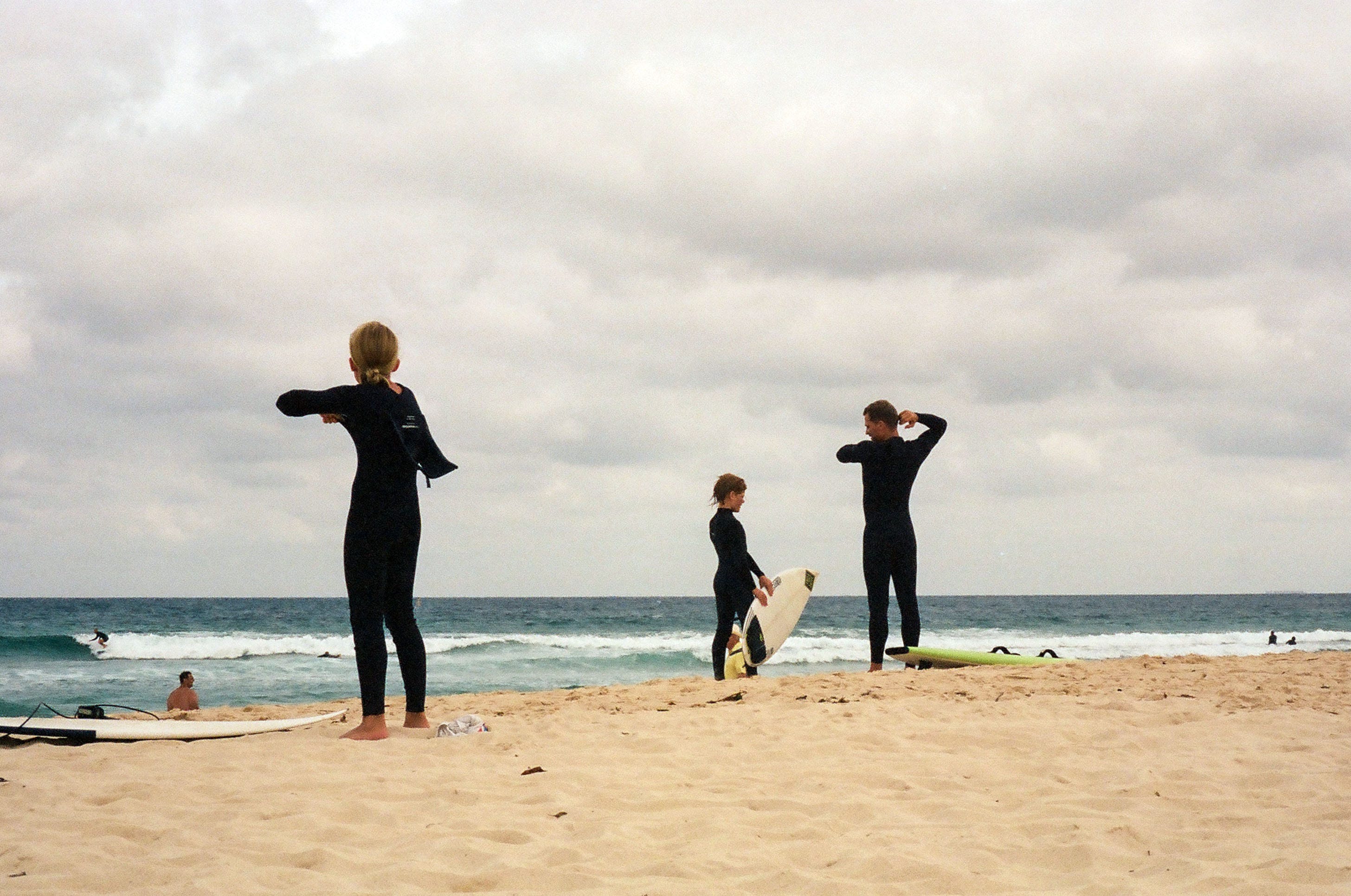
A picture I took in December 2021
<3
tears pricking at my eyes reading this. i love how you see and feel the world and express it. thank you 🫂