

I Miss Vietnam
Coming back to America feels spiritually bankrupt after spending a month returning home to Vietnam

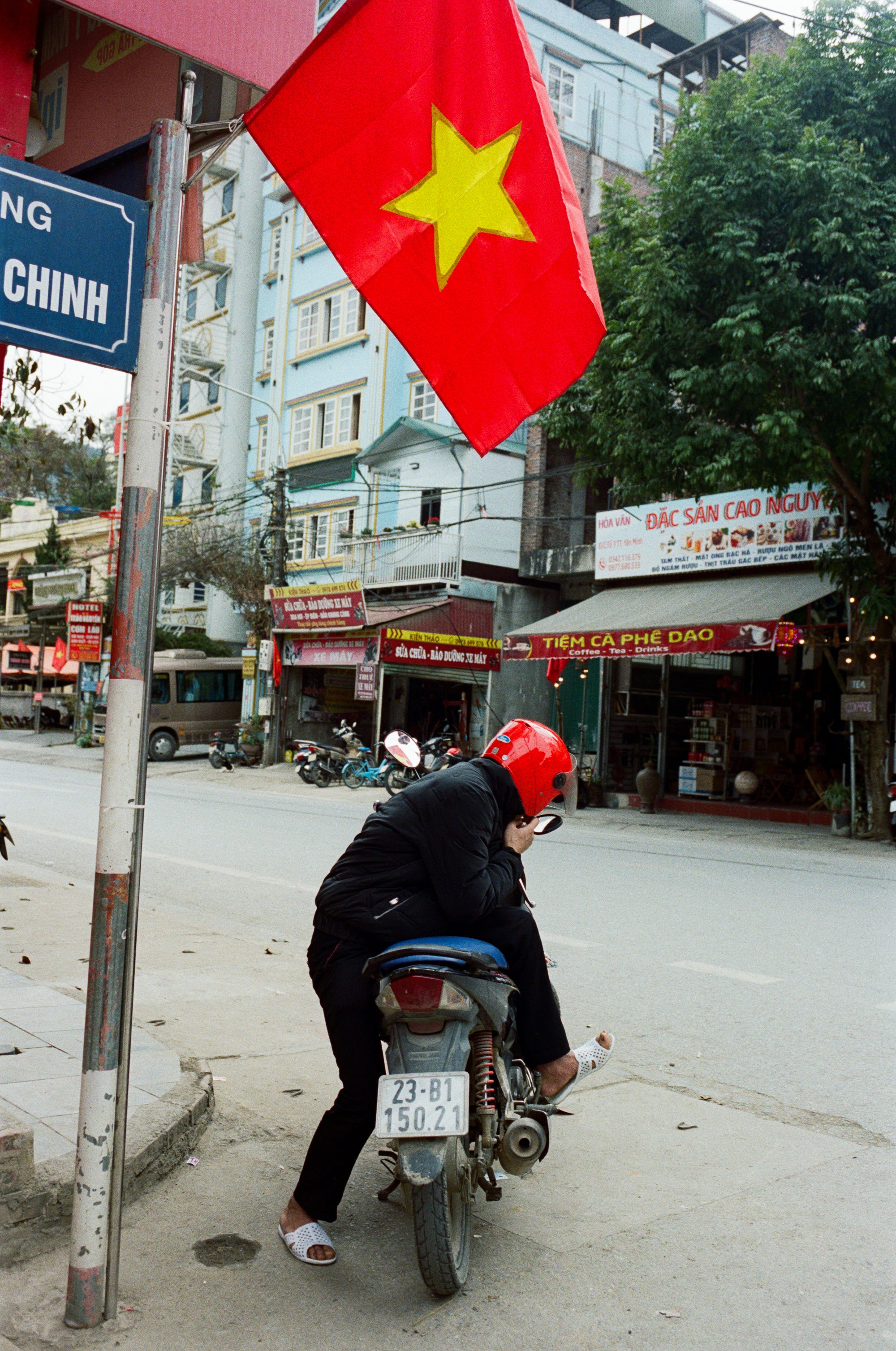
I returned from Vietnam a few weeks ago, spat back into my Western life under the rain cloud that is the Trump administration. It feels like actual trash in this country. I felt it viscerally when I landed, bursting into tears at 8AM in my kitchen, sick as a dog drinking oolong tea my uncle gifted me, listening to a compilation of Vietnamese 70s funk music called Saigon Supersound. The tea, the music, they are souvenirs, faint replicas of an indescribable emotional experience I had. I had gone and returned and put thousands of miles between me and there. Unpacking and drinking oolong tea that my uncle pressed into my hand during Tet, bringing my groceries home in my Paradise4Saigon tote bag, listening to the sounds of Vietnamese voices pour out the tinny speakers of my Google Home, these are all poor excuses of physical things that I am trying to filter the immensity of my emotion through, to relive it all as best as I can.
Typically, whenever I’ve gone through a Very Big experience, I rush to share how I feel with everyone around me. I have to yap it out, as though if I keep it inside the experience will disintegrate. If someone else does not bear witness to my experience, did it happen? Maybe that comes from growing up on the internet. I’ve trained myself since puberty to package my thoughts, feelings, preferences into a shape that others could recognize themselves in. I have seen myself as a reflection of other people for a very long time.


I felt this after Burning Man, after my ayahuasca ceremonies, after big travel trips; the urgency to share as much as I could. This time, I am almost afraid to distill the experience into words, as though speaking it aloud will break it up into pieces too small to reclaim.
I was sick for two weeks after I came home. The cold sores I developed during that time still haven’t healed. I wrote in my journal once that a vacation really ends when you’ve returned home and the mosquito bites have healed, when there is no longer any evidence on your body that your time away from home happened. My cold sores still haven’t healed.
There’s a dish from my childhood called Banh Uot that is from the South of Vietnam. It’s basically thick steamed rice noodle sheets rolled up and served in a semi warm salad of cucumbers, mint, bean sprouts and cha lua (Cody calls it Vietnamese baloney), drowned in nuoc mam (fish sauce). When I go home to Sydney, my mother will make me multiple servings to bring back to wherever I am staying. In Saigon, you can buy it casually off the street from vendors, you can get it delivered for <$5 straight to your doorstep within 15 minutes. I went to Kitchen Co Ut yesterday because it was the only place I could find in the city that sells it. It was just past lunch, around 3pm. I sat in front of a television playing clips of Vietnamese street vendors cooking, above a glass refrigerated case with clingwrapped servings of Vietnamese desserts: banh da lon, che. A sign on the fridge said, “We have banh Chung (new year cakes!)”


They only operate the machine that makes the rice noodles on weekends because there isn’t enough demand during the week. The restaurant owner greeted me in English, and switched to Vietnamese when I asked specifically for Banh Uot. My Vietnamese is not great, but it felt really nice to be recognized as one of our people. I ordered so much food I ate it in portions for the rest of the day, finishing with a late dinner consisting only of steamed pandan cake eaten straight from the takeout container at my kitchen island.
I felt deep comfort when that man was telling me about the intricacies of rice noodle machine operation in Vietnamese. The longing I feel for Vietnam is a longing for a sense of belonging I don’t think I’ve had in my country of birth, Australia, or here in the country I’ve lived in for the last decade of my life, the United States. I only lived in Saigon for a few years as a baby, and have carried it with me ever since, always falling short of understanding the extent it shaped me. I knew the rough contours of being Vietnamese before I went, the briefest of glimpses that I was chasing through shooting my project, building my relationship with my family over the years, untangling it all through doing The Work. All of that was intangible until this trip.
It is natural to have the post-travel blues, to return to a reality that shimmers far less than the memories made abroad. That’s why we travel right? To go as far away from the doldrum context of our life to see ourselves in a new place, a new culture, a new set of circumstances. The distance provides clarity of noticing ourselves anew. Returning to America during this particularly grim junction intensifies this noticing. It feels spiritually bankrupt here. The government is being dismantled piece by piece in favor of some sort of private utopia where personal favors to billionaires dictate the “correct way” to direct resources. The president is a car salesman, brandishing a piece of paper that lists the prices of different Tesla models as he stands in front of the White House labelling a Tesla boycott as an act of domestic terrorism.
The NY Times posted on Twitter a link to an article about how the Department of Education has been gutted so thoroughly that it is operating at half the size it was before the Trump presidency. Most of the responses were a variation of, “it needs a trim” and “that’s it? Why not more?”. This is the heart of America’s spiritual bankruptcy. So many people have been successfully indoctrinated in the church of hyper growth capitalism; the dehumanization of real people, real systems that benefit children, the elderly, the disabled, queer folk; all fair game at the sacrificial altar of efficiency and growth. It’s okay if other people suffer as long as I don’t, as long as my children don’t, as long as my groceries are more affordable and my taxes lower than yours.


Vietnam is not a perfect country, and nor am I a fan of its politics, but something I miss a lot is the sense of real community and ties to other people inherent in the way of life there. Every square inch of Vietnam has been fought over, has been colonized and reclaimed by its people. There is a gravity to Vietnam’s independence, a deep understanding of the heavy cost of war to a country and its people. For a place where so much blood has been spilled, I was shocked at the lightness in feeling on its streets, in its people. I am in no way discounting the challenges for people who live there, and the still wide gap in wealth that exists, but there is a tangible feeling of connectedness, whether it was a peak hour intersection in Saigon or in any of the dozens of small villages we passed on the side of windy mountain roads in the Northern Vietnamese countryside.
For one, many of the multi-story buildings in the cities are owned by a single family, where its common for their children and grandchildren to stay, live and work in the same place for generations. Most people will run businesses out of the street level entrance of their home, setting up plastic table restaurants in the alleyway. My family has run a wonton cart at the entrance of our home in District 10 since 1950. It’s still frequented by the same people who ate breakfast there decades ago. When the businesses close for the day, the people and homes are still there. Most front doors are wide open to the street, providing glimpses of domestic life to strangers walking by. Some will even hang hammocks between the treats on the street, bare feet dangling off the side. Cody and I would wander around little alleyways, each of them a neighborhood and world of its own, our heads on a swivel struggling to take in every rich and fleeting glimpse into a vast array of domestic living.
I felt it in the way that people move: by motorcycle/scooter. Grab, a ride share app, has an option to call a scooter/motorcycle, where you put on a communal helmet that has protected hundreds of people before you, hop on the back of a driver’s bike and weave in and out of the tangle of traffic together. I loved seeing the different permutations of people and animals on the back of scooters, tiny babies nestled between people, against their mother’s back. There is something truly intimate and vulnerable about all these bodies, pressed up against each other day in and day out, no car doors or windows separating you and the person in traffic next to you. You can reach out and touch them if you wanted to. I wore a top with very long tendrils of fabric that I had to gather in my hands so they wouldn’t flap in the breeze, and I was stopped so many times by well meaning people in traffic. “Chi oi, hãy cẩn thận” they would say. Sister, be careful. I loved moving around on a bike, disappearing into the mass of humanity that is Vietnamese traffic. No lanes and no real rules, but an implicit law of understanding that you are subsumed into.
Returning to America, where the national identity feels so fragmented, where the cruelty is the point and nobody seems to be able to do anything about it is deeply sad after spending a month in a place like Vietnam. America, a country where a stray foot on someone’s private property could mean getting shot, where you are watched by hundreds of personal and corporate surveillance cameras, where you go about your day shielded by headphones and by car windows, protected while you are en route from one private place to another. It is so easy to keep other people out in America.
In Vietnam, you would hear the sound of karaoke on the streets any time of the day. It was impossible to keep people out; it is impossible to be inured to the sensory overload of Vietnam. It requires you to participate; to side step the dog shit and rotting bones on the street, to cross the road through the tangle of traffic, to walk by families going about their daily lives in the open, to hear the sounds of someone absolutely belting their guts out at street karaoke 9AM on a Wednesday morning in the middle of the street. There’s a joke that there’s no crime because every neighborhood auntie is a human surveillance camera. Your business is everybody’s business when you live where you work and you all live on top of each other. I think that’s what I miss most of all: the responsibility to others, the inability to ignore that responsibility because you can see it, hear it, feel it, because it is embedded in the culture. That’s the truth of the matter: we are all deeply connected to one another, whether we like it or not, no matter how much we try to pretend otherwise.
I loved your writing and the pics! I recently returned to Spain after two years in Vietnam, and I’m missing it terribly. Despite huge cultural differences, life there truly resonated with me, especially out of the city.
Vietnam reminds me of the Spain of my childhood, my father came from one of the most impoverished (financially) parts of the country. The community was caring, supportive and shared what little they had. There was also a greater sense of freedom because life wasn't so heavily regulated. Yes whole families also rode on a single motorbike.
I believe that while we have different cultures around the world, we are very much alike at our core.
I often tell my Vietnamese friends that we are at a later stage of capitalism in the west. While capitalism brings "progress", it also brings social 'regression' individualism, greed, and the breakdown of values and community. And unfortunately in Spain we are much further down that path.
I hope Vietnam doesn't change too much in the coming years🤞🏼
Jess, do you believe in God? Try to listen to the Redeemer downtown church’s sermon series “ The God’s Story” by Rev. Pete Nicolas who has just finished a 13 sermons series on “ in the City as in Heaven” they will help answer many big life questions offering joy and hope. I beg you to try. I promise that you will never regret listening to those sermons based on God’s loving word..love you too much not to share.
🥰 🙏